
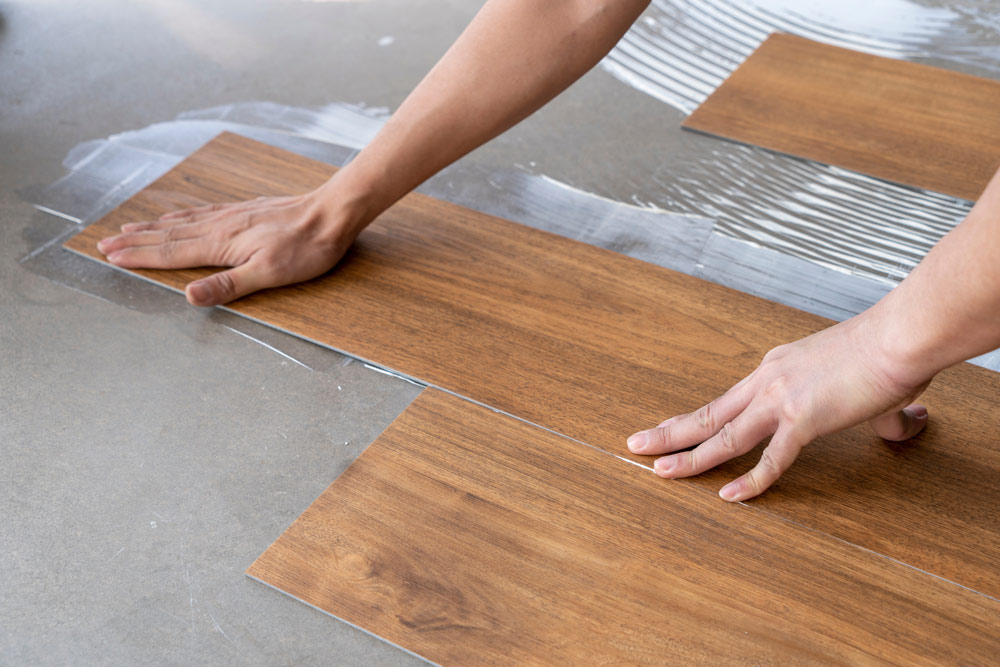
We’ve all heard the expression “You get what you pay for,” and when it comes to LVP flooring, this is definitely something we want to keep in mind. After all, there are so many choices ranging from colors, thicknesses, and wear layers just to name a few. Have you ever visited a flooring showroom thinking you’ll have your floor chosen in no time only to be overwhelmed by all the options in front of you? If you answered yes, there’s no need to panic! We’re here to help you understand the world of LVP and how to choose a floor that will be perfect for you.
Before we get started, let’s discuss what LVP is and how it’s made. Luxury Vinyl Plank (LVP) flooring is a popular choice for homeowners due to its durability, affordability, and versatility.
What Is Luxury Vinyl Plank Flooring?
Luxury Vinyl Plank flooring is designed to mimic the look of natural hardwood or stone flooring. It’s composed of multiple layers that contribute to its durability and realistic appearance. LVP is known for being waterproof, making it an ideal option for areas prone to moisture like kitchens and bathrooms.
How Is LVP Flooring Made?
LVP flooring typically consists of four main layers:
Wear Layer
This top layer is made of a transparent coating of polyurethane or aluminum oxide, providing resistance to scratches, stains, and wear. The thickness of the wear layer varies, usually between 12 to 20 mils—sometimes even up to 27 mils—and contributes to the floor’s durability.
Decorative Layer
Beneath the wear layer is a high-resolution printed layer that gives LVP its realistic look, replicating the appearance of wood, stone, or other materials.
Core Layer
This is the structural layer, providing stability and durability. There are different types of cores, such as:
- SPC (Stone Plastic Composite): Made from a mixture of limestone, PVC, and stabilizers, offering a rigid, durable core.
- WPC (Wood Plastic Composite): Includes wood fibers and plastic, providing a softer, more cushioned feel underfoot.
Backing Layer
The bottom layer adds additional moisture resistance and sound absorption. It can be made from materials like cork, foam, or fiberglass, enhancing the comfort and acoustic properties of the flooring.
Benefits of LVP Flooring
LVP flooring is highly durable, easy to clean, and simple to install. Its water-resistant properties make it suitable for high-moisture areas, and the range of designs allows homeowners to achieve the look of natural materials at a lower cost. Additionally, LVP is a good choice for homes with pets and children due to its scratch and stain resistance.
What About Thickness and Cost?
Luxury Vinyl Plank flooring is available at a variety of price points, typically ranging from $2 to $10 per square foot, with an average between $4.25 to $6.80 per square foot. This pricing can be influenced by several factors, including the thickness of the planks, which generally ranges from 4mm to 12mm (average 5mm to 7mm). Lower-priced options around $2 per square foot often feature thinner planks with basic designs, while higher-end LVP flooring at $10 per square foot offers thicker planks, enhanced durability, and more intricate, realistic designs.
How Do I Choose the Right Floor for Me?
The right floor for you will vary depending on several factors. Take a look at your daily lifestyle and household and ask yourself, “How do we operate on a daily basis?” Some households have only 2 people living there with no pets, while others host events and parties every weekend. The type of household that you have will determine what type of flooring you should purchase.
For example, if it’s just you and a spouse and you’re very careful with maintenance, you can opt for a floor that has a thickness of 4mm–6mm with a 12mil–20mil wear layer. You can expect to pay around $3.15–$4.75 per square foot for this type of floor.
On the other hand, if you host parties and events all the time, or you have a busy house with pets, we recommend going with a thicker floor like 8mm with a 20mil wear layer or better, with a price point starting around $5.75 per square foot. This ensures that no matter what, your floors will withstand whatever you put them through.
One more thing to keep in mind about the thickness of a floor is this: the locking system on LVP flooring is based on how thick the actual floor is. When you have a thinner floor, there isn’t much room for a strong and structural locking system, which can lead to it getting damaged and breaking over time. As you increase the thickness, so does the locking system, because there’s more room to incorporate a heavier-duty locking system that will last much longer.
Our Standard
Over the years we’ve installed all types of LVP flooring at different price points, and we noticed a pattern. The floors that held up over time and had the best performance had a minimum thickness of 6mm with a 20mil wear layer. We’ve checked in with homeowners months and years after we’ve finished a project, and the results have been that a thicker floor and heavier wear layer always lasted.
Upgrading your floors with LVP is more than just a purchase—it’s a valuable investment in your home’s future. High-quality LVP not only enhances the aesthetic appeal and comfort of your living spaces but also adds to the overall value and longevity of your property. While you don’t always need to spend the most money to achieve great results, it’s important to prioritize quality.
Still have questions? Contact Simple Floor Solutions and we’ll walk you through it.